


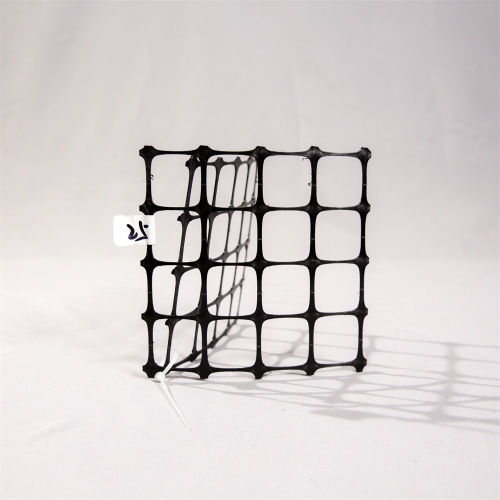
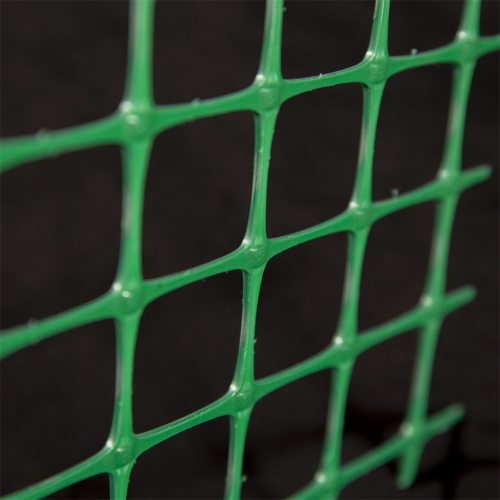
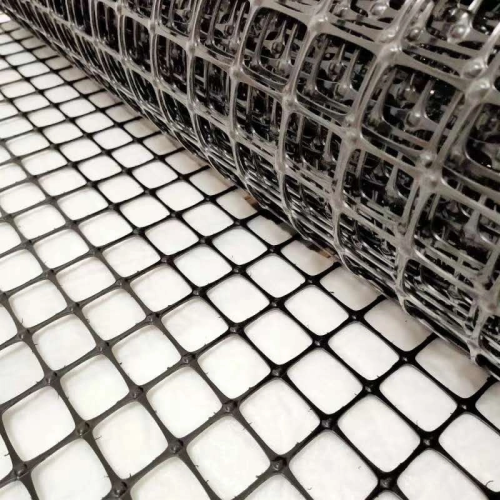
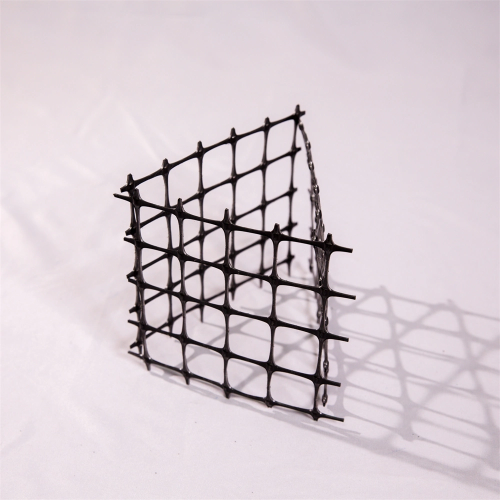
PP Extruded Biaxial Geogrid For Roads
High-quality PP Biaxial Geogrid: The Optimum Engineered Solution for Soil Stabilization & Reinforcement
Introduction: The Beginning of Modern Civil Engineering
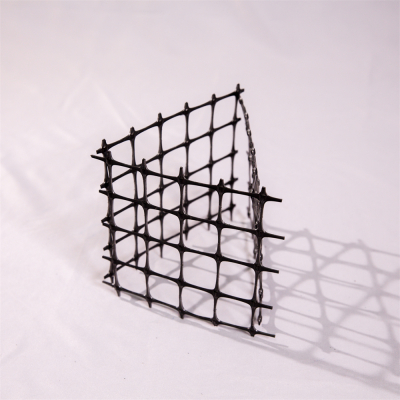
In the current construction environment, where shorter project lifetimes, faster construction speed and absolute dependability are regarded as crucial, PP Biaxial Geogrid has become an essential synthetic geotextile material for engineers and contractors in all countries. Made from high-tenacity polypropylene, this engineered polymeric grid offers superior tensile strength along both lengthwise and cross-wise axes.
Unlike uniaxial geogrids which provide strength only in one direction, the special biaxial geogrid structure supplies comprehensive, multi-directional reinforcement and is therefore indispensable for load distribution, base stabilization and soil confinement applications. Dual-biaxial geogrids have been specifically engineered to address these requirements in terms of technical characteristics and functions.
For international B2B buyers in the transportation, civil engineering and construction sectors, grasping the advanced capabilities and precise applications of polypropylene biaxial geogrids is a must. After all, these are the materials that serve to guarantee the integrity of your project over time.
Core material science: why is polypropylene so powerful another important basis for the success of the products is that its basic polymer is isotactic polypropylene. Provides the fundamentals for product success by providing a basic ‘iso’ polypropylene. The base polymer is stactic polypropylene. One of the most important reasons for selecting isotactic polypropylene as the raw material for the products derives from its high degree of resistance to various chemicals. This resistance makes polypropylene geogrid especially suitable using it in earthworks operations. Even during construction in places where there is total chemical corrosion, including corrosive soils; Hitting something abrasive like a brine solution Either acidity / alkalinity Organic bodies or chemicals of the whole spectrum Low Water Absorption .A critical factor for drainage and subgrade conditions, because polypropylene plastic will keep its original strength no matter how long time this contact with the water may go on indefinitely. Gives the necessary rigidity for load bearing of course while also providing enough flexibility so that it can be laid down easily onto the subgrade according to its contours. uv Stabilization After compounding with carbon black, the material’s resistance to ultraviolet degradation is greatly enhanced, insuring performance during and after construction exposure.
Advanced Manufacturing Process: Overall Strength by Alignment
The high tenacity butterflies geogrid to the north of fiber direction is determined by a controlled, multi-step production process:Extrusion: Melt virgin polypropylene resin and then extrude the myriad varieties of extruded grid as follows:
(strip type–first generation; common width or flat type–second generation; selective permeability type’s filling width to obtain different kinds of conduction function etc). Note that widths are available from 0 to about 10 mm.The following section focuses on producing biaxial geogrid made from Virgin Polypropylene Resin Precision Punching: The sheet is punched with a regular array of holes, creating the nascent aperture pattern.
Simultaneous Biaxial Stretching (Orientation): This is the most critical phase. The punched sheet is heated to a specific molecular relaxation temperature and then stretched simultaneously in two directions. This molecular orientation, which aligns the polymer chains, dramatically increases tensile strength and stiffness while reducing elongation.
Annealing and Finishing: The stretched grid undergoes controlled heat-setting to lock in the oriented structure, ensuring dimensional stability. The result is an integrally formed geogrid sheet with strong, monolithic junctions where ribs intersect.
Key Product Specifications:
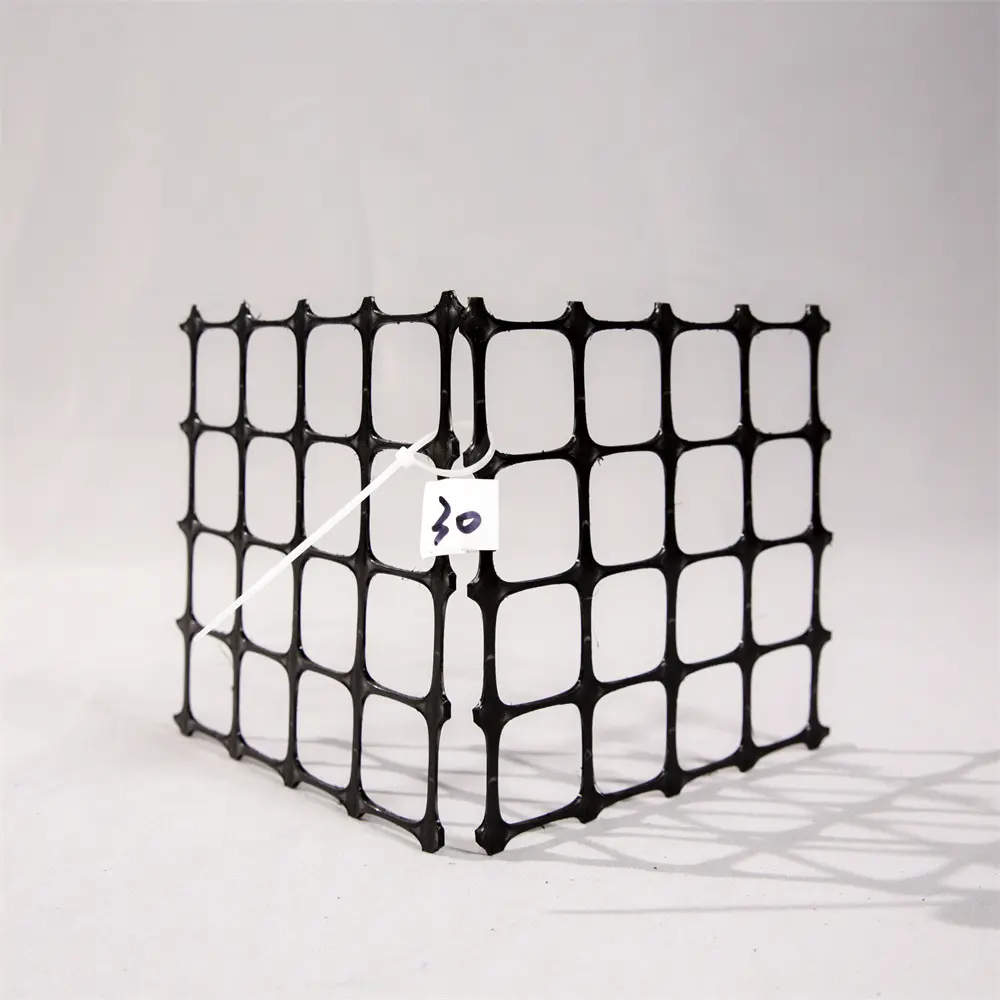
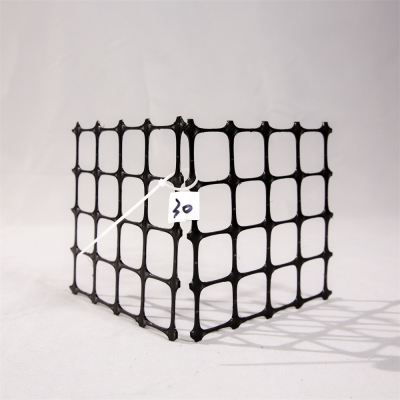
• Aperture Size: Normally 15 mm square pitch up to 40 mm square
pitch, to match well with different sizes of aggregate.
• Roll Dimensions: Standard widths of 2.0–6.0 m and lengths of
either 50 or 100 m per roll, so it is particularly convenient for
large-area constructions.
• Strength Grades: For depths (J) from 20 to 60 mm and all lengths (JF) from 20 m upwards we manufacture different products targeted at specific uses. These are essential for light access roads etc.
Technology Features & Benefits
Properties / measurement indicators of Biaxial Geogrid Mama recommends that simply sticking to geometric calculation is not enough. When choosing what kind of geogrid, look at the product’s technical essentials as well.
Load-Bearing properties with Higher Tensile Strength and Modulus.
Biaxial stretching of the product at the primary points gives a high tensile strength and (modulus) which is rigid in every direction. This biaxial strength allows the yarn to successfully accept and transmit loads over a greater area. At the same time, it cuts down on loads concentrated into one spot and improves the low-load ground.
Enhanced Soil-Aggregate Interlock
The engineered apertures are built to lock tightly into the compacted granular fill. Based on this, a composite layer is formed that is reinforced at its innermost layer and takes all three dimensions at once, confining particles without allowing lateral movement. for the performance of base reinforcement geogrids, this is quite important.
Optimal Junction Strength and Efficiency
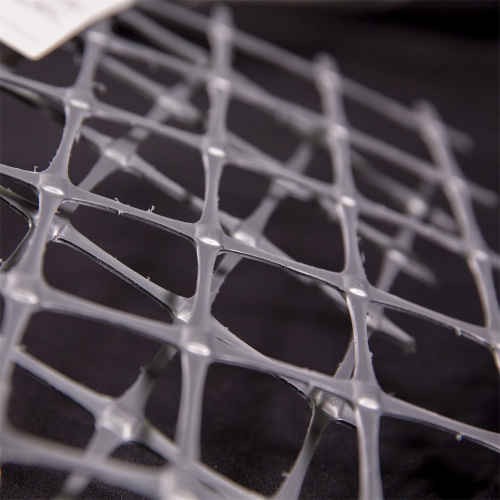
The junctions are all integral and molecularly fused which is the hallmark of good quality. They allow longitudinal and transversal ribs to effectively transfer stress, while preventing stress concentration points and allowing the grid to work as a single unit when under load.
Outstanding Creep Resistance
Polypropylene has good long-term load-bearing properties. A properly manufactured PP geogrid has minimal deformation under sustained load (creep), which is vital for the permanent performance of structures and paved roads.
Main Application Areas and Project Benefits
PP Biaxial Geogrid has become the standard product in a broad range of stabilization and reinforcement projects, offering significant advances in both the cost and the effectiveness of performance.
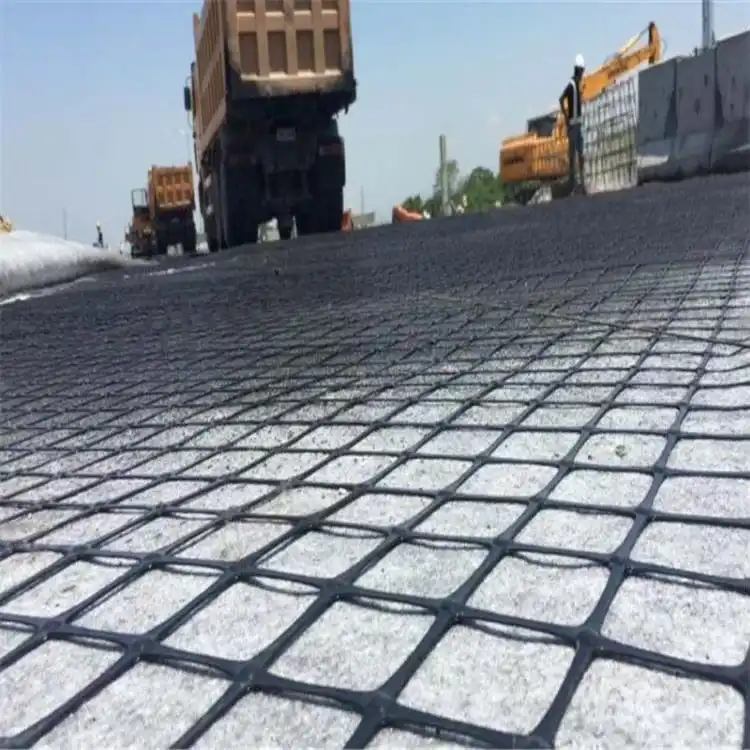
Pavement Construction
· Primary Function: Located between the bottom course and the subgrade, or within the bottom aggregate layer.
· Benefits: By spreading the wheel load over a greater distance, it reduces letdown and reflective cracking; it allows the layer of grinding pavement supporting courses to be cut down (by 30-50%) and extends pavement service life. This is geogrid ‘s primary function in road construction.
Working Platforms and Access Roads on Poor Ground
· Application: Placed directly on soft, cohesive subgrade.
· Function: Creates a safe work platform for construction traffic, significantly reduces subgrade failure, cuts down on aggregate loss and allows work to proceed in wet conditions.
Take construction geogrid for example and here is a clear illustration of its use.
Railway Ballast and Sub-Ballast Reinforcement
· Application: Laid below or within the ballast layer.
It is one clear advantage of construction geogrid.
. Benefits: Seperates ballast particles, wholesale tracks collapse and maintain frequency, and raises the overall stability of lines.
Landscaping and Light-Duty Area Stabilization
· Application: Laid beneath gravel driveways, parking lots and pedestrian pathways.
Also, this point is clear with regard to construction geogrid.
. Benefits: Stop backfilling of gravel into the subsoil layer, maintaining an even surface and an excellent nature for good drainage.
Summary of Installation Best Practices:
Subgrade Preparation: A relatively smooth, compacted surface, free from sharp protrusions should be prepared
Roll Placement: Unroll the geogrid (with the principal strength direction, if specified, typically perpendicular to the direction of traffic), maintain the side, and end overlaps (usually 6-12 inches minimum).
Fastening: Staple (or stake) on slopes in windy conditions to restrict its movement during backfill.
Aggregate Placement: The first lift of fill (preferably with a tracked veihicle) should be carefully placed and compacted in thin layers so as to avoid damaging the grid.
FAQs for Global B2B Buyers and Specifiers
Q1: What is the major functional difference between Biaxial and Uniaxial Geogrids?
A: That difference lies in the direction of tensile strength and the major application. A Uniaxial Geogrid has high tensile strength dominantly in one direction (machine direction), and is designed for wall and slope reinforcement where forces are mainly unidirectional. A PP Biaxial Geogrid has substantial and balanced strength in both directions, ideal for base stabilization applications where loads spread laterally in multiple directions, such as under roads, platforms and foundations.
Q2: How do I select the correct strength grade and aperture size for my project? (kN/m)
A: The choice is based on the project plans. The key factors to consider include:
· Subgrade Strength (CBR-value factor): Lower grade subgrades need higher geogrid strength.
· Traffic Loading: Heavier cars (e.g., container trucks) required specification are also increased.
· Design Life and Aggregate Size: The aperture size must be tailored to ensure good mechanical interlock with your own particulars of aggregate. Consulting your project’s geotechnical engineer or the technical department of a reputable geogrid manufacturer is critical for accurate specification.
Q3: Is PP Biaxial Geogrid suitable for permanent exposed applications?
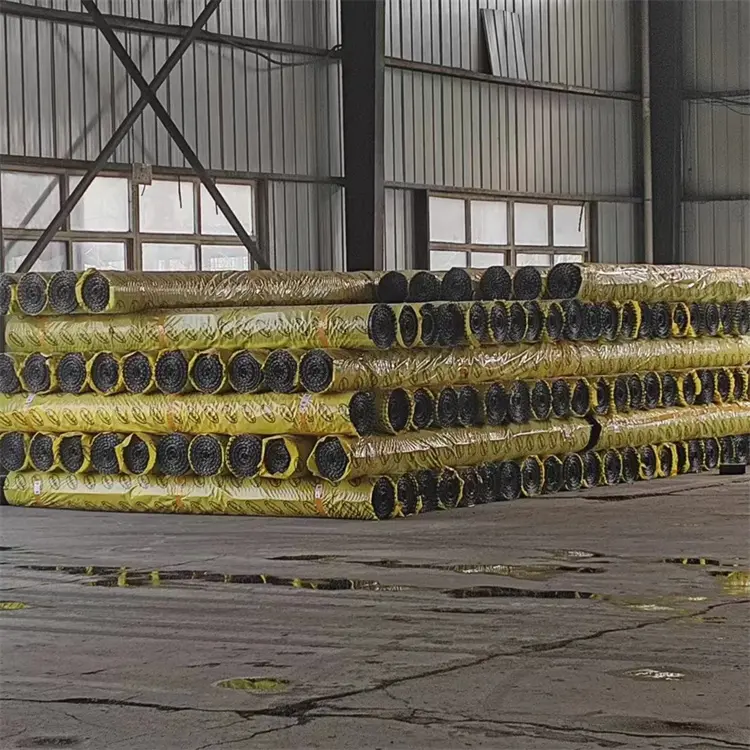
A: If general polypropylene geogrids are left outside and in the blazing summer sun, after some time (months to years) they will become degraded by UV rays. For permanently exposed applications (e.g., some erosion control works or landscape features) a geogrid with specific UV protection, specially formulated UV stabilized geogrid with 2-3% carbon black content, must be specified. Standard applications where the geogrid is immediately covered or can be offered shelter from direct sun exposure, without the same UV stabilization is adequate.
Q4: What quality certifications and test data should I demand from a supplier?
A: Always ask for complete documentation to ensure product conformance:
· Independent Third-Party Test Reports: For proof of tensile strength (ASTM D6637), junction strength, aperture stability.
· Manufacturer’s Certificate of Conformance (COC): Confirming that the product complies with specification bought.
· Material Data Sheets: Confiding polymer type, UV stabilizer content, carbon blacks percentage.
· International Standards Compliance: ASTM, ISO or GRI GG2 for biaxial geogrids
Related Products
Related News