

Can Emulsified Asphalt Penetrate Heavy Weight (400gsm)Polyester Filament Nonwoven Geotextile?
Introduction
Road rehabilitation with asphalt overlay commonly uses polyester filament geotextile as an interlayer to control reflective cracking and block water infiltration. Many civil contractors and road engineers ask one critical question: can emulsified asphalt fully penetrate heavy weight polyester filament geotextile?
The short answer: Yes, emulsified asphalt can penetrate heavy weight continuous polyester filament geotextile, yet full saturation depends on fabric grammage, emulsion type, application rate, construction temperature and curing time. Heavy weight PET filament geotextile (typically 200–300 gsm, sometimes up to 400 gsm for heavy-duty pavement) has thicker fiber structure and higher asphalt retention capacity than lightweight grades, which raises higher requirements for tack coat construction.
What Is Heavy Weight Polyester Filament Geotextile?
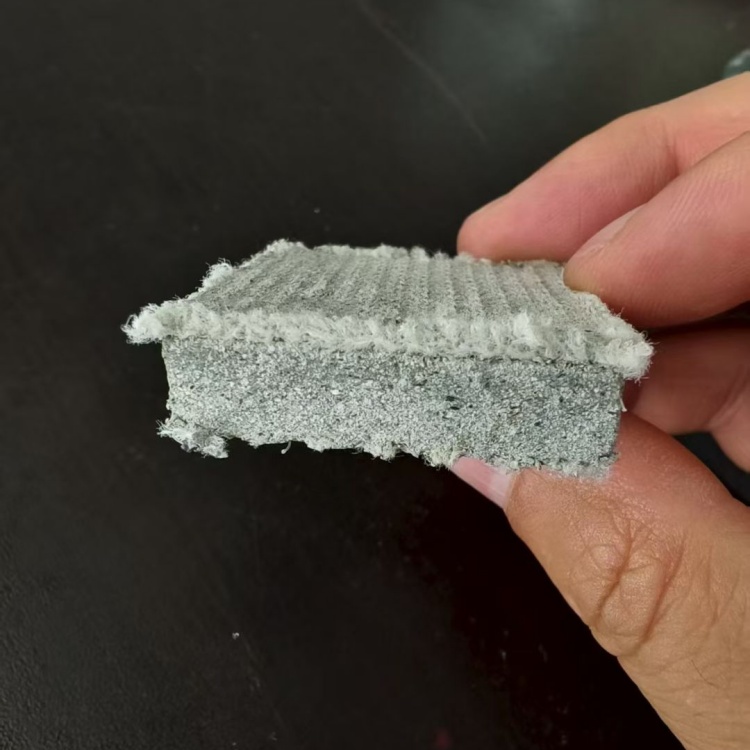
Heavy weight polyester filament geotextile is needle-punched nonwoven fabric made of 100% continuous PET filaments. It features high tensile strength, excellent puncture resistance, stable void structure and good heat resistance for asphalt overlay projects.
- Standard heavy weight range for asphalt interlayer: 200 g/m² ~ 300 g/m²
- Higher grades (350–600 gsm): for heavy traffic roads, airport taxiways and severely cracked old pavements
- Core advantage: thicker fiber mat absorbs more bitumen after saturated, forming a flexible waterproof stress-absorbing membrane between old pavement and new asphalt overlay
How Does Emulsified Asphalt Penetrate PET Filament Geotextile?
Emulsified asphalt (mostly cationic type for road tack coat) is bitumen dispersed in water. When sprayed as a tack coat onto the prepared base surface, the emulsion stays fluid before breaking. Once the emulsion breaks, water evaporates and residual bitumen sticks and wets the polyester filaments, gradually penetrating the voids inside the geotextile.
- Light / medium weight geotextile (≤150 gsm) Emulsified asphalt penetrates quickly and fully with normal spray rate. Easy saturation, high risk of bitumen bleed-through.
- Heavy weight polyester filament geotextile (≥200 gsm) The thicker entangled filament network slows down penetration. Partial penetration happens easily; full saturation needs proper construction control. If applied insufficiently, emulsified asphalt only wets the bottom surface. The middle and upper fiber layers remain dry, resulting in poor interlayer bonding, weak crack resistance and insufficient waterproof effect.
Key Factors Affecting Penetration Effect
1. Emulsified asphalt type
Cationic rapid-set or medium-set emulsified asphalt is preferred for paving fabric tack coat. Anionic emulsion has weaker adhesion with polyester fibers and slower breaking speed. Slow-set emulsion is not recommended for heavy geotextile saturation.
2. Application rate of emulsified asphalt
This is the most critical factor. For heavy weight polyester filament geotextile, the total spray dosage must be increased to meet residual bitumen requirement.
- Recommended residual asphalt: 0.8–1.1 kg/m²
- Corresponding emulsified asphalt spray amount: about 1.6–2.2 kg/m², adjusted according to fabric grammage and site condition Too little emulsion → incomplete penetration; too much → asphalt bleed through the geotextile, causing slippage between pavement layers.
3. Geotextile structure
Nonwoven continuous filament geotextile has connected void channels, which allows emulsion to flow through. Heat-calendered dense surface reduces penetration speed, which helps avoid bleed-through but needs longer curing time.
4. Site temperature & curing time
Higher ambient temperature accelerates emulsion breaking and penetration. In low-temperature or humid weather, you must extend curing time to let water evaporate before hot asphalt overlay paving. Laying hot asphalt before emulsion fully breaks will trap water and create blisters.
Spray it in two stages (the safest method to ensure complete saturation).
How to Construct?
- First, spray modified emulsified asphalt (it is recommended to use SBS-modified emulsified asphalt with an evaporation residue of ≥60%) on the base layer, at a dosage of 0.4–0.6 kg/m², and then lay geotextile;
- After laying the geotextile flat and smooth without wrinkles, spray a layer of emulsified asphalt of the same type on the fabric surface, at 0.5–0.6 kg/㎡;
Total usage: 1.0~1.3 kg/m², which allows the emulsified asphalt to gradually infiltrate and penetrate the entire 400g geotextile. After demulsification, the geotextile becomes a fully asphalt-impregnated waterproof and crack-resistant layer, bonding with the upper and lower road surfaces into a unified whole without any layering.
Common Mistakes in Field Construction
- Using the same spray rate for 300 gsm heavy geotextile as 150 gsm lightweight fabric → incomplete saturation
- Laying geotextile too late after emulsion spraying → emulsion already breaks and loses fluidity
- Poor surface cleaning, dust on old pavement blocks emulsified asphalt contact
- Over-spraying emulsified asphalt → bleed through, causing interlayer sliding failure
When to Choose Heavy Weight Polyester Filament Geotextile for Emulsified Asphalt Tack Coat
Select 200–300 gsm polyester filament geotextile with emulsified asphalt tack coat for these projects:
- Highway & municipal road rehabilitation with severe reflective cracks
- Pavement with heavy vehicle load, bus lanes and port access roads
- Areas with high groundwater and frequent rain, requiring reliable waterproof interlayer
- Milled old asphalt surfaces with rough texture
Conclusion
Emulsified asphalt can penetrate heavy weight polyester filament geotextile and fully saturate the fabric under correct construction parameters. Heavy weight PET filament geotextile brings stronger puncture resistance and better anti-cracking performance, yet engineers must upgrade emulsified asphalt application rate, select proper cationic emulsion and control curing time.
Full saturation turns the geotextile into a composite bitumen membrane, which reduces reflective crack propagation and prevents water damage, extending asphalt pavement service life significantly.
FAQ
Q1: Can emulsified asphalt fully soak 300gsm polyester filament geotextile?
A: Yes, with cationic medium-set emulsified asphalt and sufficient spray volume plus proper curing, full saturation can be achieved.
Q2: What happens if emulsified asphalt cannot penetrate the heavy geotextile?
A: Poor bonding between layers, the geotextile cannot form integrated waterproof membrane, reflective cracks will quickly spread to new overlay.
Q3: Is polyester filament geotextile compatible with emulsified asphalt?
A: Yes. Polyester fiber has good compatibility with bitumen and high melting point, stable under hot asphalt construction temperature.
Related News