




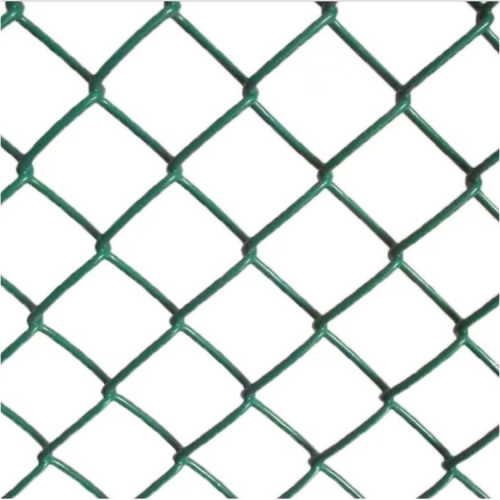
Welded Mesh Fence
Product Details
Welded Mesh Fence: The Premium Perimeter Security Solution for Industrial, Commercial and Infrastructure Projects
Introduction: Defining the Standard in Perimeter Protection
In an increasingly security-conscious world, the perimeter fence is the first line of defense for any facility. It must be robust, durable, visually uncluttered, and virtually impossible to breach. The Welded Mesh Fence has emerged as the global benchmark for high-security perimeter protection, offering a unique combination of strength, transparency, aesthetic appeal, and long-term durability. Unlike woven wire fences that can be easily separated, or palisade fences that present a harsh visual barrier, the welded wire mesh panel is manufactured from high-tensile steel wires, resistance-welded at every intersection to create a rigid, monolithic, and immensely strong panel. This construction method delivers a fence that is not only difficult to cut or climb but also maintains its integrity and appearance for decades with minimal maintenance.
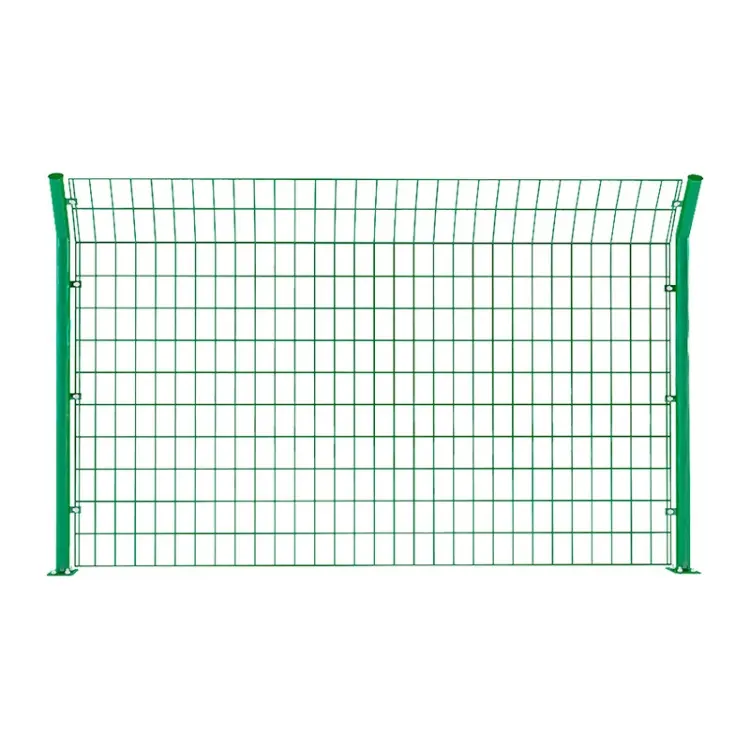
For international B2B buyers, security consultants, and project managers involved in critical infrastructure, industrial sites, logistics hubs, and commercial developments, specifying a high-quality Welded Mesh Fence is a decision that directly impacts site security, operational continuity, and long-term asset value.
Product Overview: Precision-Engineered Security Panels
A Welded Mesh Fencing System is far more than a simple grid of wires. It is a precision-engineered assembly of components designed to work together as a cohesive, impenetrable barrier.
Core Components and Construction:
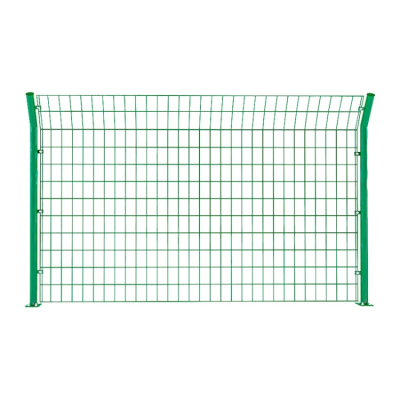
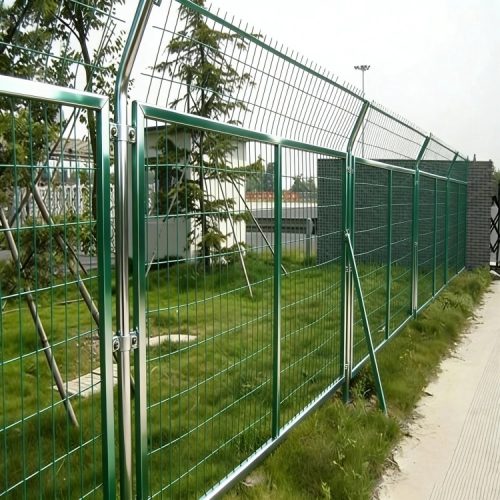
1. The Welded Mesh Panel: This is the primary element. Manufactured from high-tensile steel wires (typically 4.0mm to 8.0mm diameter), arranged in a precise grid pattern (e.g., 50mm x 200mm, 50mm x 50mm, or 100mm x 200mm apertures). Each intersection is fused using advanced resistance welding technology, creating a bond as strong as the wire itself. This eliminates the risk of wires slipping or the mesh unraveling—a common failure point in woven fences.
2. The Frame (Optional but Common): Panels are often mounted within a heavy-duty rectangular hollow section (RHS) steel frame. This framed welded mesh panel provides exceptional rigidity, prevents edge distortion, and allows for secure, tamper-proof fixing to posts.
3. Support Posts: Robust fence posts—typically “C” section, “I” section, or square hollow section steel—are hot-dip galvanized and set in concrete foundations. They provide the structural backbone for the entire system.
4. Anti-Climb and Anti-Cut Features:
· Anti-Climb Design: The small aperture sizes prevent finger and toe holds, while the smooth surface offers no purchase for climbing tools.
· High-Tensile Wire: The use of high-tensile steel (often 500-700 N/mm²) makes cutting through the mesh with bolt cutters exceptionally difficult.
5. Fixing and Anti-Tamper Hardware: Panels are attached to posts using concealed, non-return, or shear-off fixings that cannot be undone with standard tools, preventing panel removal from the outside.
6. Surface Protection: The complete system (mesh and posts) undergoes a rigorous anti-corrosion treatment, typically hot-dip galvanizing (to ISO 1461) followed by a polyester powder coating (to RAL colors) in a duplex system, offering decades of maintenance-free life.
Manufacturing Process:
1. Wire Drawing: High-quality steel rod is drawn to precise diameters.
2. Mesh Welding: Wires are fed into automated welding machines, where they are precisely positioned and resistance-welded at every intersection. This process is computer-controlled for consistent quality and mesh geometry.
3. Panel Cutting and Framing (if applicable): Welded mesh sheets are cut to size. For framed panels, the mesh is clamped or welded into a pre-formed steel frame.
4. Surface Treatment: Panels and posts are cleaned, pickled, and hot-dip galvanized with a thick, metallurgically bonded zinc coating. For colored finishes, they are then powder coated in a state-of-the-art electrostatic painting line and oven-cured.
5. Quality Control: Finished products undergo rigorous inspection for weld strength, coating thickness, and dimensional accuracy.
Technical Characteristics & Performance Advantages
The Industrial Welded Mesh Fence delivers a range of quantifiable security and operational benefits.
1. Unsurpassed Physical Security
The combination of high-tensile steel, welded intersections, and robust posts creates a barrier of exceptional strength. It resists cutting, climbing, and impact, acting as a significant physical and psychological deterrent. This is the foundation of high-security fencing.
2. Exceptional Durability and Corrosion Resistance
The duplex coating system (galvanizing + powder coating) provides two independent layers of protection. The zinc coating sacrificially protects the steel even if scratched, while the powder coat provides a tough, UV-stable, and aesthetically pleasing finish. This ensures a long-lasting fence with a service life often exceeding 30 years, even in harsh industrial or coastal environments.
3. Aesthetic Clarity and Openness
Unlike solid walls or close-boarded fences, the welded mesh panel offers high transparency. This allows for natural surveillance (see-through security), maintains sightlines for drivers and pedestrians, and creates a less oppressive, more professional appearance for the facility.
4. Low Maintenance and Lifecycle Cost
Once installed, a quality powder coated welded mesh fence requires virtually no maintenance. It does not need painting, rotting timber sections to replace, or sagging wires to tighten. The total lifecycle cost is significantly lower than timber, chain link, or even some other metal fencing systems.
5. Rapid and Secure Installation
The modular panel system allows for fast, predictable installation. Prefabricated panels are simply lifted into place between pre-set posts and secured with the specialized anti-tamper fixings. This reduces on-site labor time and ensures consistent quality.

Primary Application Areas
The Security Welded Mesh Fence is the specified perimeter solution for a vast range of high-value and critical sites.
1. Critical National Infrastructure
· Power Plants (Nuclear, Thermal, Renewable): Protecting highly sensitive assets requiring the highest levels of security fencing.
· Water Treatment and Pumping Stations: Securing facilities vital to public health and safety.
· Telecommunications Compounds and Data Centers: Preventing unauthorized access to critical network hubs.
2. Transportation and Logistics
· Airports and Ports: Perimeter security for airside areas, cargo terminals, and restricted zones.
· Railway Depots and Stations: Securing trackside areas, maintenance yards, and passenger infrastructure.
· Logistics Parks and Distribution Centers: Protecting high-value goods and ensuring operational continuity.
3. Industrial and Commercial Sites
· Factories and Manufacturing Plants: Defining boundaries and controlling access.
· Warehouses and Storage Yards: Preventing theft and vandalism.
· Commercial and Business Parks: Providing a secure, professional perimeter.
4. Public and Government Facilities
· Military Bases and Government Buildings: The highest level of perimeter protection.
· Prisons and Correctional Facilities: Extremely robust, anti-climb, anti-cut barriers.
· Schools, Universities, and Stadiums: Balancing security with a welcoming, open appearance.
5. Renewable Energy Projects
· Solar Farms and Wind Farms: Protecting large, often remote installations from theft and vandalism. The transparent mesh is ideal for not casting shadows on solar panels.
Installation Process Overview:
1. Site Survey and Layout: Precise measurement and marking of post positions.
2. Post Installation: Setting galvanized steel posts in concrete foundations to exact alignment and height.
3. Panel Mounting: Lifting panels into position and securing them to the posts using the specified anti-tamper fixings.
4. Gates and Accessories: Installing matching welded mesh gates, barbed wire/razor wire outriggers, and other security enhancements.

FAQ for International Buyers and Security Professionals
Q1: What is the main difference between Welded Mesh Fence and traditional Chain Link Fence?
A: The fundamental difference is construction and strength. Chain link is a woven fabric where wires are intertwined but not fixed, allowing them to slip and be cut more easily. Welded mesh has each intersection permanently fused, creating a rigid, monolithic panel that is exponentially stronger and more resistant to cutting, spreading, and climbing. It also offers a cleaner, more rigid aesthetic.
Q2: How do I choose the correct mesh aperture and wire diameter for my security requirements?
A: Selection balances security level with visibility.
· Standard Security (50mm x 200mm / 4.0mm-5.0mm): Common for general industrial and commercial perimeters.
· High Security (50mm x 50mm / 5.0mm-6.0mm): The smaller square aperture provides superior anti-climb and anti-cut protection, as it eliminates any potential toehold. Ideal for prisons, airports, and critical infrastructure.
· Very High Security (25mm x 25mm / 5.0mm+): Used where the utmost security is required, sometimes in combination with anti-cut properties.
Thicker wire diameters provide greater cutting resistance. Consult security standards (e.g., ASTM, EN) and your risk assessment.
Q3: What level of corrosion protection is needed for a coastal or highly polluted industrial environment?
A: For such aggressive environments, the duplex coating system (hot-dip galvanizing + powder coating) is mandatory. The galvanized coating should meet a minimum thickness (e.g., 70-85 microns per ISO 1461). The powder coating adds an additional 60-100 microns of barrier protection and provides color. This combination far outperforms galvanizing alone and is essential for long-lasting fence performance in harsh conditions.
Q4: Can Welded Mesh Fencing be integrated with electronic security systems?
A: Absolutely. This is a major advantage. The rigid, open structure of the welded mesh panel provides an ideal mounting platform for a range of perimeter intrusion detection systems (PIDS) , including:
· Taut wire sensors
· Fence-mounted vibration sensors (detecting cutting/climbing)
· Infrared and microwave beams (the openness minimizes beam interference)
· CCTV cameras
The predictable and stable nature of the fence enhances the reliability of these detection systems.
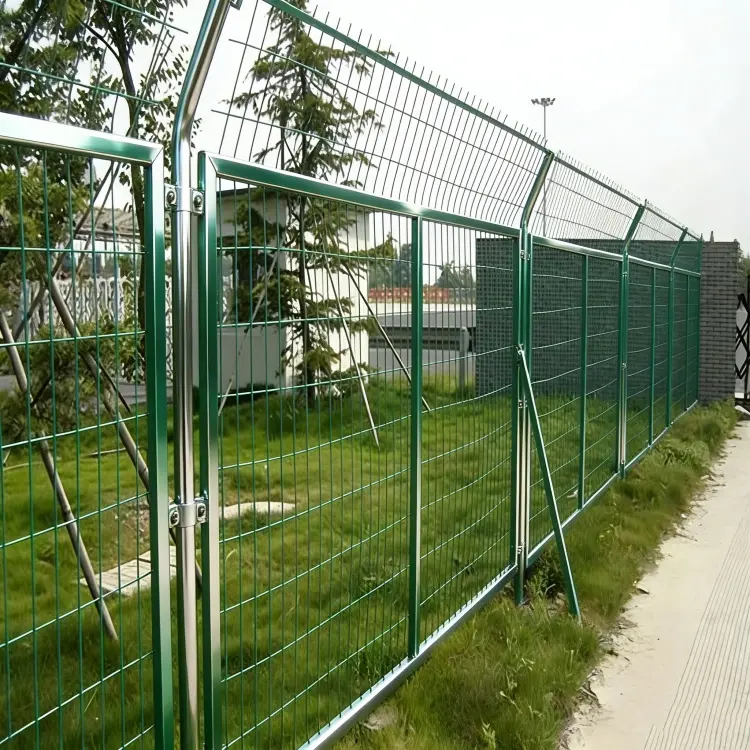
Customer Visit
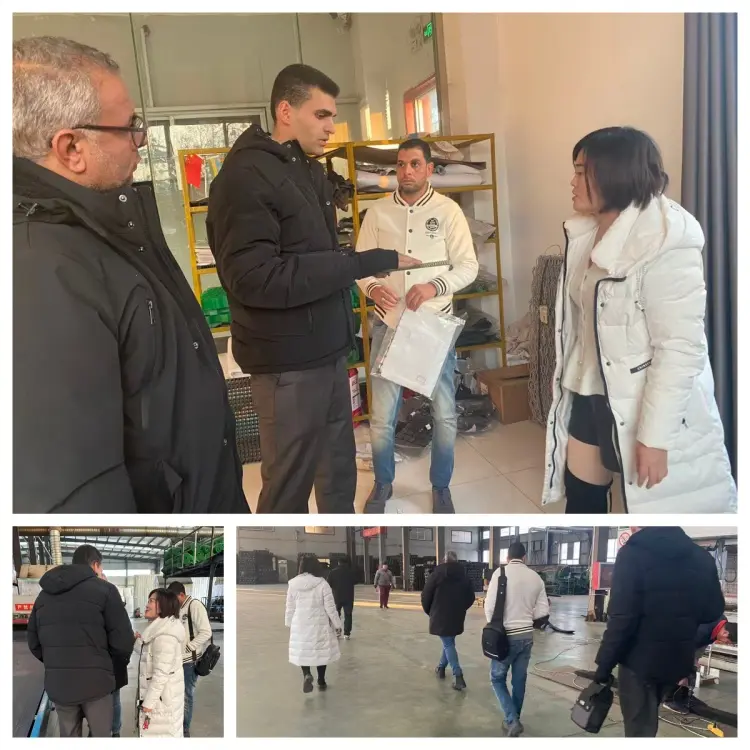
Customer Review

Related News